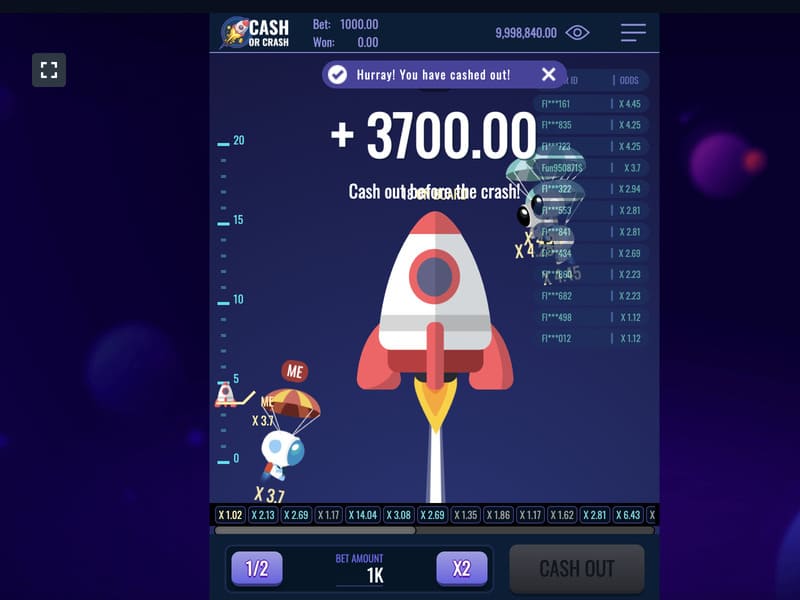
Online gaming remains captivating, but for UK parents, keeping it safe remains the primary focus cashorcrashlive.net. Combining parental controls with an experience like Cash or Crash Live is a practical way to reach that balance. This overview describes how advanced supervision tools can work alongside the title’s real-time play. The guide gives parents simple steps to regulate playtime, expenditure, and entry. The effect creates a space where the entertainment stays secure and suitable for young gamers. Understanding these features allows a parent to transition from simply observing to directly influencing their youngster’s gaming experience.
Creating a Family Agreement for Balanced Gaming
Technology is powerful, but it works best in combination with open conversation. Establishing a family gaming agreement transforms rules into shared understanding. This document, made together, can define when and how long Cash or Crash Live can be played. It can establish that all spending is controlled by parents, and emphasize the need to balance gaming with other hobbies. It creates clear expectations and lets the child be part of the solution. This collaborative method fosters trust and teaches responsible habits that last much longer than any single game. It establishes a foundation for sensible digital behavior for life.
Informative Instances and Honest Dialogue
Using parental controls doesn’t have to be a secret. Explaining to a child why these limits exist protects their time, ensures safety, and teaches money management. It turns a restriction into a learning chance. Discuss about the math behind games like Cash or Crash Live, the randomness of results, and how it’s designed as paid entertainment for adults. This eliminates the mystery out of the game and presents it properly for your home. Regular chats about their gaming experience maintain the conversation going. They enable parents adjust controls as the child grows and shows more responsibility.
How Parental Controls Function with Cash or Crash Live
Introducing parental oversight to Cash or Crash Live involves utilizing a mix of platform-level controls and careful account management. The game functions within the wider frameworks established by device operating systems and, where relevant, casino operator platforms. Parents shouldn’t have to puzzle it out alone. These systems are designed to be both intuitive and robust. By managing the master account settings on a device or within an operator’s app, a parent can manage the gaming experience effectively. This layered approach makes sure that even if a child understands the game inside out, the basic rules about time and money remain fixed, supervised by the account holder.
Device-Level Controls: Your First Line of Defense
The most comprehensive control suite generally lives on the device itself. Both major mobile and desktop operating systems provide detailed parental supervision features that are applicable to every installed app, Cash or Crash Live included. These work well because they cover the entire digital environment.
iOS Screen Time and Content Restrictions
Apple’s iOS features a function called Screen Time. Parents can configure a passcode-protected profile for their child’s device or utilize “Family Sharing.” From here, they can set daily app limits for Cash or Crash Live, arrange “Downtime” where only chosen apps work, and most importantly, apply “Content & Privacy Restrictions.” This can block explicit content and, critically, prevent iTunes & App Store purchases and in-app purchases. It locks down the ability to spend money without the parent’s passcode.
Android Digital Wellbeing and Family Link
Google offers similar tools through Digital Wellbeing on individual devices and the more powerful Family Link app for controlling across devices. Parents can set up a supervised Google Account for their child, then define daily time limits on specific apps, secure the device remotely at bedtime, and handle permissions. Crucially, they can mandate approval for any purchases made on the Google Play Store. This adds a necessary safeguard on potential spending inside gaming apps.
Common Questions
Can I entirely stop my child from playing Cash or Crash Live?
Certainly. The best method uses device-level controls. On iOS, use Screen Time’s “Content Restrictions” to block app installations or delete the app completely. On Android, use Family Link to block the specific operator app. Additionally, as the account holder, you can set deposit limits to zero and start a long-term Time-Out on the operator platform. This prevents all gameplay.
Do these parental control methods have legal enforcement in the UK?
Device controls like those on iOS or Android are standard software features. The operator tools, on the other hand, are part of UK Gambling Commission licensing rules. When you set a deposit limit or self-exclusion with a licensed UK operator, they must enforce it by law. This gives a regulatory safeguard on top of the technical device controls.
My child is technically skilled. Is it possible for them to bypass these controls?
Circumventing properly set controls is challenging. The Screen Time passcode on iOS or the Family Link supervisor password on Android are separate from the device lock code and should be kept secret. Operator account passwords must also be secure. A determined teenager might try workarounds like factory resetting a device, but this would delete all their data and apps. That serves as a powerful deterrent and would alert you straight away.
Is it enough to just use the operator’s deposit limits?
It’s essential to use operator limits, but not enough by itself. Device controls add necessary layers for managing overall screen time, stopping other unapproved apps from being installed, and blocking in-app purchases across the whole system. For full coverage, a defense-in-depth strategy using both device restrictions and operator-specific tools is the best recommendation.
What’s the best way to begin a talk with my child about gaming controls?
Frame the talk around safety and balance, not punishment. Explain that these tools are for protection, like seatbelts in a car. Discuss the exciting parts of the game, but also talk about time management and financial responsibility. Involve them in making a family media agreement. Letting them participate in rule-making increases their willingness to cooperate and understand the boundaries.
Setting up Operator and Account Safeguards
Beyond the device, the given operator platform hosting Cash or Crash Live includes its own responsible gaming tools. These are meant for the account holder, likely the parent, to oversee their own play or to impose strict limits for supervised access. These tools are direct and function effectively for the particular gaming environment. They combine with device controls to establish a double-layered safety net for a higher responsible experience.
Utilizing Responsible Gaming Tools
Reputable UK gaming operators supply a collection of tools in their “Responsible Gambling” or “Safer Gaming” sections. While mostly for adult self-management, they are equally powerful for parental control when a parent holds the sole account. Setting up these settings actively creates a tightly restricted environment.
Establishing Deposit Limits and Loss Limits
This is possibly the most important operator-level control. Parents can establish strict daily, weekly, or monthly deposit limits on their account. They can even reduce them to zero to prevent any spending. Loss limits can also limit the amount lost in a set period. Once set, these limits typically can’t be increased instantly. A cooling-off period of 24 hours or more is often required, which stops impulsive changes even by the account holder.
Using Time-Out and Self-Exclusion
For longer breaks, operators offer Time-Out features for periods like 24 hours, a week, or a month, plus longer-term Self-Exclusion. If a parent desires to guarantee no access to the game for an extended time, they can initiate a Time-Out. This freezes the account completely. It’s a sure way to stop all gameplay on that operator’s platform, encouraging a full break for other activities.
Recognizing the Need for Parental Controls in Gaming
Young people appreciate the digital playground for its constant engagement. Yet this captivating space comes with real challenges. Unchecked spending, too much screen time, and harmful content or social interactions are common concerns. Parental controls provide a necessary digital boundary. They allow games like Cash or Crash Live be fun while ensuring things safe and responsible. The point isn’t to kill the fun, but to foster a positive and healthy gaming space. For families across the UK, using these controls is a proactive decision. It imparts lessons about limits and mindful play, all while shielding younger players from potential harm.
The Primary Risks Targeted by Controls
Parental control systems handle specific concerns that parents regularly mention. Reviewing these core risks shows how targeted tools establish a safer space. These features count even more for fast-paced, interactive live game shows where engagement runs high.
Managing In-Game Purchases and Deposits
Surprise spending is a major issue for any parent. Games with optional purchases need clear safeguards. Parental controls can block or require approval for any financial payment. This blocks a child from making deposits or buying in-game items without a parent’s direct permission. It avoids surprise bills and starts talks about the value of digital goods. What could be a point of conflict becomes a opportunity to discuss financial responsibility in a controlled setting.
Regulating Screen Time and Play Sessions
Too much gaming can disrupt sleep, homework, and physical activity. Today’s parental tools enable for daily or weekly time limits on specific apps or the whole device. Once the allowed time for Cash or Crash Live is up, access halts. This assists young players to learn self-regulation skills and achieve a healthy balance between online adventures and offline life. It also means parents don’t have to nag constantly.
Detailed Setup Guide for parents in the UK
Taking action becomes easier with a structured approach. Here is a useful, detailed guide for UK Parents to create a protected gaming setup for Cash or Crash Live. This process mixes device and operator controls for the maximum effect. Follow these steps in order to create a full safety net. Remember, the objective is to set it up right once, then monitor it now and again. This brings tranquility and a smooth, entertaining experience for the whole family in the household’s digital life.
Phase 1: Device Security
Start with the physical device. Whether it’s a shared family tablet or a child’s own phone, securing the device is the essential first step. This makes sure any app, including gaming or operator apps, operates within the established boundaries you set. It stops unauthorized app installations and is the primary barrier against accidental purchases. It provides parents complete control over the digital world their child accesses.
For iPad/iPhone
Go to Settings, then Screen Time. Press “Turn On Screen Time,” then “Proceed.” Select “This is My Child’s [Device].” Establish a secure Screen Time passcode, separate from the device passcode. Next, tap “App Limits” to add a daily limit for Entertainment or Games, which will include Cash or Crash Live. After that, go to “Content & Privacy Restrictions,” activate them, and under “iTunes & App Store Purchases,” choose “In-App Purchases” to “Don’t Allow.” Moreover, inside “Content Restrictions,” you can set proper content ratings for software.
Using Android Phones/Tablets
Install the “Google Family Link” app on your device and your child’s device. Go through the prompts to make a supervised Google Account for your kid or connect their current account. Within the Family Link app on your handset, select your child’s profile. Press “Controls,” after that “Apps” to define time restrictions. Open “Controls,” then “Store settings” and toggle “Require approval” for app purchases. This ensures you’ll get a notification to approve or deny any purchase request from their phone.
Step 2: Configuring the Operator Account
If we assume the parent is the account holder, sign in to the cashorcrashlive.net operator website or app. Find the “Responsible Gaming,” “Safety,” or “Account Settings” section. Search for the tools setting deposit limits. Set these to your preferred level. Try setting a very low limit or zero if the account is only for supervised play. Identify and enable “Reality Checks” or session reminders. Finally, understand where the “Time-Out” option is for future use. These settings are legally binding on the operator. They give a strong second layer of protection specific to the gaming activity.
Maintaining and Modifying Restrictions Through the Years
Establishing parental controls isn’t a one-time job. That’s an continuous process. When children get more grown-up and demonstrate more responsibility, the settings ought to be checked and possibly loosened in stages. Plan quarterly “digital check-ins” with your child to talk about what’s working and what isn’t. This is the opportunity to adjust screen time boundaries, debate the concept of a small, controlled spending allowance with pre-authorization required, and update content filters. That open approach honors the child’s developing maturity level while maintaining a core safety system. It ensures the controls evolve as the young gamer does.